Every successful software product starts with an idea, but turning that idea into a business requires more than development. Startups need to understand their customers, validate demand and determine whether their solution solves a problem worth paying for.
Building a complete application before validating these assumptions can consume significant time and money.
That's where a Minimum Viable Product (MVP) becomes useful.
An MVP is the simplest usable version of a product that delivers its core value to early users and helps founders test important business assumptions.
Instead of investing in dozens of features, startups can launch a focused product, collect feedback and improve it based on actual usage.
This guide explains how to build an MVP for a startup, the development process, estimated costs, timelines and mistakes to avoid before launching.
What Is an MVP in Software Development?
A Minimum Viable Product (MVP) is an early version of software containing the essential features required to solve a specific user problem.
The purpose of an MVP is not simply to release an unfinished application. It is to provide enough functionality for users to experience the product's main value while allowing the startup to validate its assumptions.
For example, a startup planning a food delivery platform might initially develop restaurant listings, ordering, payments and basic order tracking.
Advanced recommendations, loyalty programmes and marketing automation can be introduced after the business validates its initial offering.
A well-planned MVP balances functionality, usability and development investment.
Why Should Startups Build an MVP First?
Validate Your Business Idea
- An MVP helps founders test whether potential customers are interested in their proposed solution.
- Instead of relying entirely on assumptions, startups can observe how real users interact with the product.
Reduce Development Risk
- Building fewer features reduces the amount of work committed before understanding customer requirements.
- An MVP cannot eliminate business risk, but it can help identify incorrect assumptions earlier.
Launch and Learn Faster
- A smaller product scope generally allows startups to release usable software sooner.
- Early feedback can reveal usability problems, missing functionality and opportunities for improvement.
Make Better Investment Decisions
- Founders can use product usage data, customer feedback and early commercial results to decide whether further development is justified.
- This creates a more evidence-based approach to product investment.
How to Build an MVP for a Startup: 8 Essential Steps
Developing an MVP requires a structured process that connects business validation with practical software development.
Step 1: Identify the Problem You Want to Solve
Start by defining the customer's problem rather than listing application features.
Ask yourself who experiences the problem, how frequently it occurs and how people currently address it.
For example, if small businesses struggle to manage appointments, the initial problem may be scheduling and reducing missed bookings.
Your MVP should focus on solving that problem before expanding into unrelated features.
Step 2: Research Your Target Audience and Competitors
Interview potential customers to understand their existing workflows, frustrations and expectations.
Review competing products to identify common features, pricing approaches and areas where users remain dissatisfied.
The objective is not to copy competitor functionality. It is to find a meaningful problem your product can address.
Early research should help you identify the users most likely to try your first release.
Step 3: Define Your Core Value Proposition
Your value proposition explains why customers should use your application.
A useful formula is:
Our product helps [target users] solve [specific problem] through [core solution].
For example, an appointment scheduling product might help independent service providers manage bookings and reduce administrative work through an easy-to-use online system.
Every essential MVP feature should support this value proposition.
Step 4: Prioritise MVP Features
Separate features into must-have, should-have and future enhancements.
Consider an appointment booking MVP:
| Must-Have Features | Future Enhancements |
|---|---|
User registration | AI recommendations |
Service listings | Loyalty rewards |
Appointment booking | Advanced analytics |
Booking confirmation | Marketing automation |
Basic admin dashboard | Multiple business locations |
Prioritise features that allow users to complete the main task successfully.
Avoid including functionality simply because competing products offer it.
Step 5: Design the User Experience
Create user flows, wireframes and interface designs before development.
Focus on how users discover the product, complete its primary task and understand the results.
For most startup MVPs, clarity and ease of use matter more than elaborate animations or complex visual effects.
A simple, accessible interface also makes initial usability testing easier.
Step 6: Select the Right Technology Stack
Technology decisions should reflect the product's requirements, expected growth and available development resources.
Common options include React or Next.js for web interfaces, Node.js or Python for backend services, and PostgreSQL for relational data storage.
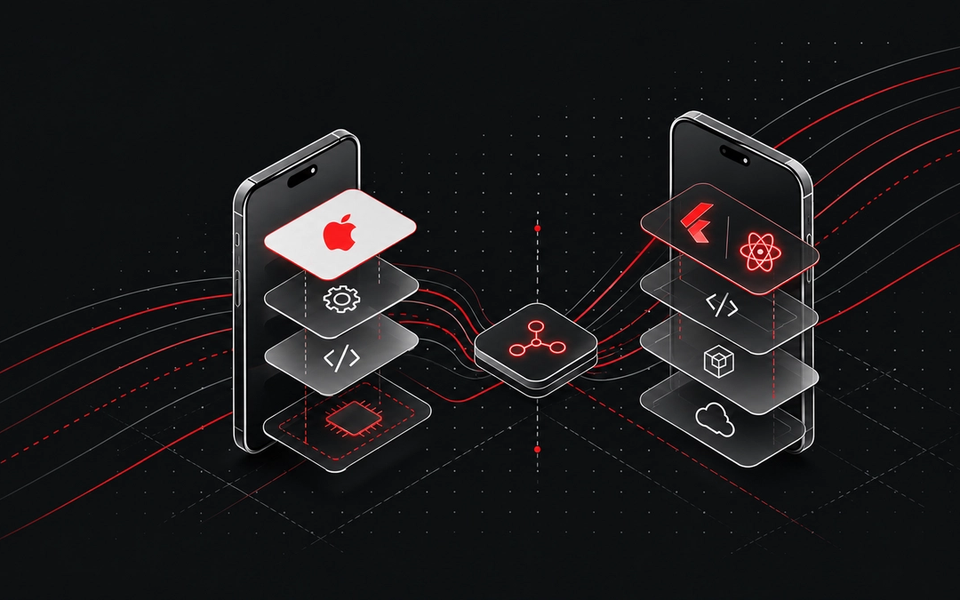
Mobile products may use native development or cross-platform frameworks such as Flutter and React Native.
The best stack is not necessarily the newest one. It should support reliable development, maintainability and the features your MVP actually needs.
Step 7: Develop and Test Your MVP
Build the application around its primary user journey.
Development typically includes frontend interfaces, backend logic, database design, authentication and essential integrations.
Test the complete workflow before launch, including unsuccessful payments, invalid inputs, permission restrictions and unexpected user actions.
Security, data protection and basic performance requirements should not be postponed merely because the product is an MVP.
Step 8: Launch, Measure and Improve
Release the MVP to a defined group of early users rather than assuming an immediate large-scale launch is necessary.
Track meaningful metrics such as activation, retention, task completion, customer feedback and willingness to pay.
Use these findings to decide which features need improvement and which assumptions require further testing.
An MVP succeeds when it produces useful learning, even if that learning leads to changing the original product idea.
How Much Does It Cost to Build an MVP?
A custom software MVP may require an indicative development budget of $5,000 to $40,000 or more, depending on the features, platforms, integrations and technical complexity.
A focused web application may fall toward the lower end, while a multi-platform product with complex workflows may require substantially more investment.
| MVP Type | Illustrative Development Cost |
|---|---|
Basic web application | $5,000–$12,000 |
Mobile application MVP | $8,000–$20,000 |
SaaS platform MVP | $12,000–$30,000 |
Marketplace MVP | $15,000–$40,000 |
Complex AI-powered MVP | $20,000–$50,000+ |
These figures are illustrative planning estimates, not verified market averages or Synskayl quotations. Actual costs depend on scope and delivery arrangements.
What Affects MVP Development Cost?
The most important factors include:
- Feature complexity: More workflows and business rules require additional engineering.
- Platform selection: Web, Android and iOS requirements influence development effort.
- UI/UX design: Custom interfaces and complicated user journeys increase design work.
- Third-party integrations: Payments, messaging and external services add implementation requirements.
- Security: Sensitive data and regulatory obligations require additional controls.
- Development team: Team composition and engagement models affect project pricing.
Infrastructure, third-party subscriptions and ongoing support may also create costs after launch.
Startups should request estimates based on documented requirements rather than relying entirely on generic pricing tables.
How Long Does It Take to Develop an MVP?
A focused MVP may take approximately 6 to 16 weeks, although more complex products can require several months.
| Development Phase | Indicative Timeline |
|---|---|
Discovery and requirements | 1–2 weeks |
UI/UX design | 1–3 weeks |
Core development | 4–8 weeks |
Testing and refinements | 1–2 weeks |
Launch preparation | 1 week |
Some activities can overlap, so these phases should not automatically be added together.
Development schedules depend on scope stability, technical complexity, decision-making speed and integration dependencies.
A realistic timeline should also allow time for feedback and unexpected technical issues.
MVP vs Prototype vs Proof of Concept
These terms describe different approaches to validating a product idea.
| Approach | Main Purpose |
|---|---|
Proof of Concept (PoC) | Test whether a technical idea is feasible |
Prototype | Demonstrate how a product could look or work |
Minimum Viable Product | Deliver usable functionality to real users and validate business assumptions |
A startup might first build a prototype to test its user experience, develop a PoC for a technically uncertain feature and then release an MVP.
Not every project requires all three stages.
Common MVP Development Mistakes to Avoid
Building Too Many Features
- Adding every possible feature can delay launch and increase expenses.
- Focus on delivering the product's core value before introducing advanced functionality.
Skipping Customer Research
- An application can work perfectly and still fail to attract customers.
- Speak with potential users before committing to development.
Ignoring Product Quality
- An MVP should be limited in scope, not unreliable or unsafe.
- Broken primary workflows and confusing interfaces can prevent meaningful validation.
Choosing Technology Without Considering Maintenance
- A technology stack that accelerates the first release but creates unnecessary future complexity may increase long-term expenses.
- Consider maintainability and available engineering expertise.
Measuring Downloads Instead of Real Usage
- Registrations and downloads do not necessarily indicate customer value.
- Track whether users complete important tasks, return to the product and find the solution useful.
How to Measure MVP Success After Launch
Choose metrics that directly reflect your business assumptions.
For a subscription-based application, useful measurements may include activation rate, returning users, trial-to-paid conversion and customer retention.
For a marketplace, completed transactions and repeat purchases may provide stronger evidence of value than account registrations alone.
Startups should define these metrics before launch and establish a regular process for reviewing feedback.
Avoid treating a single positive metric as proof of product-market fit. Look for consistent evidence that customers need and use the product.
When Should You Scale Beyond an MVP?
Scaling becomes more appropriate when the product demonstrates repeatable customer value and the startup understands what users need.
Signs may include improving retention, recurring customer demand, willingness to pay and growing usage of core functionality.
Before expanding, review application performance, security, infrastructure costs and technical debt.
New features should support validated customer needs rather than assumptions about future growth.
How Synskayl Can Help You Build Your Startup MVP
Building an MVP requires balancing business goals, development costs, technical feasibility and launch timelines.
Synskayl provides MVP Development Services to help startups plan and develop focused software products.
Whether you're building a SaaS application, mobile platform or custom business solution, the development process should begin with clearly defined requirements and a practical product roadmap.